Crimson Desert Damage Calculator & Combat Simulator

Updated for Patch Launch v1.0
Last Check: Mar 26, 2026

Advanced mercenary combat analytics. Calculate raw damage, critical variance, and elemental effectiveness with our Pywel-calibrated engine.

Black-Iron Cleaver VS Mercenary Axe

Pywel Combat Comparison

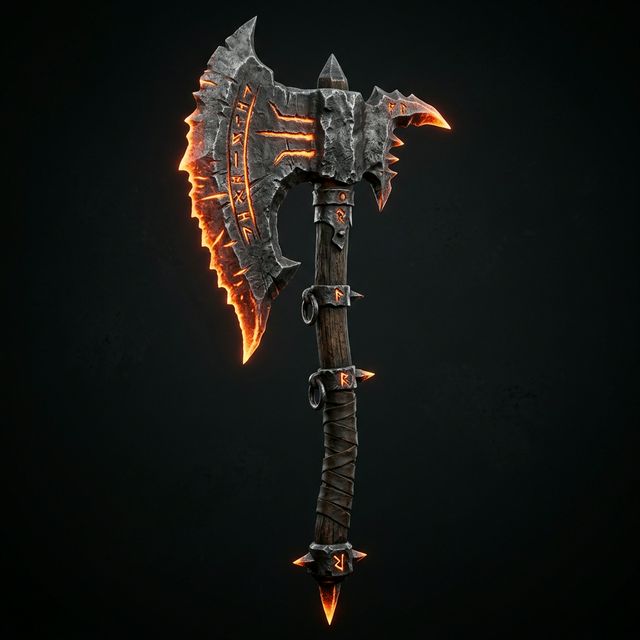
Black-Iron Cleaver

Black-Iron Cleaver

Axe
VS

Mercenary Axe

Axe
Winner
πŸ† Black-Iron Cleaver
Black-Iron CleaverStatMercenary Axe
βœ“ 115Base Damage60
28RPM48 βœ“
βœ“ 54DPS48
50Accuracy50
50Movement Speed50
0%Armor Pen0%
βœ“ 2.143sTTK (Close)3.750s
βœ“ 2Shots to Kill4
2.00xHS Multiplier2.00x
6Magazine6
2.000sReload Speed2.000s

πŸ“Š TTK by Range

Close Range2.143s
Medium Range2.143s
Long Range4.286s
Black-Iron Cleaver
Mercenary Axe

🎯 Scenario Breakdown

Close Range (0-10m)
Black-Iron Cleaver
Black-Iron Cleaver has a 1.607s faster TTK
Medium Range (10-30m)
Black-Iron Cleaver
Better damage retention at medium distance
Long Range (30m+)
Black-Iron Cleaver
Superior long-range damage retention
Against Armor (40%)
Black-Iron Cleaver
Faster time-to-kill through armor

πŸ“Š Detailed Analysis: Black-Iron Cleaver vs Mercenary Axe in Crimson Desert

Mobility & Handling: Neither weapon dominates in mobility β€” both options allow similar rotational flexibility in engagements. Breaking this down shots-first: the Black-Iron Cleaver requires 2 shots for a kill, the Mercenary Axe needs 4 β€” a gap that matters in spray duels. The Black-Iron Cleaver converts those shots faster with 54 DPS versus 48. For pure elimination speed, the Black-Iron Cleaver clocks 2.143s TTK against the rival's 3.750s.

Squad Role: In squad contexts, the Black-Iron Cleaver fits best as an entry fragger given its elimination profile. For cover and support roles, consider the range characteristics of the alternative weapon.

Ultimately, the best weapon is the one that fits your playstyle. If you prioritize fast eliminations in close-range fights, the Black-Iron Cleaver has the mathematical edge. If you play passively or engage at mid-range, test both before committing to a loadout slot.

Decoding Pywel Combat: Why Damage Modeling Matters

In Crimson Desert, victory is defined by your ability to exploit the systematic interactions between your gear and the monster's defensive stance. Every swing of a Mercenary Claymore or fire-coated arrow carry hidden variables that go far beyond simple base power. Our damage calculator models these exact interactionsβ€”including strength/dexterity scaling, critical multipliers, and weakpoint targetingβ€”to give you a definitive edge in both open-world exploration and high-stakes boss encounters.

The game utilizes a "Weighted Momentum" system where the speed of your character and the timing of your strike modify the final damage output. While our simulator focuses on the statistical baselines, it accounts for the skill multipliers and elemental bonuses observed in the latest Pywel engine benchmarks. This allows you to plan your build with mathematical certainty, knowing exactly how much physical and elemental damage you will inflict on different enemy archetypes.

Interpreting Your Combat Data

1

Raw vs Effective Hit

Raw hit is your damage before armor; Effective hit is what the enemy actually loses. Higher penetration reduces this gap.

2

Crit Weighted DPS

The average damage output per second when factoring in your critical hit chance and multipliers.

3

Weakpoint Multiplier

Specific enemies have vulnerable spots. Hitting these triggers a massive boost, which we model in the advanced calculation.

4

Elemental Surge

The bonus damage gained from hitting a target with a specific elemental weakness or status effect synergy.

Armor Mitigation and Elemental Synergies

Enemies in Crimson Desert, from common bandits to massive world bosses, possess tiered armor and resistance stats. Armor in Pywel operates on a diminishing returns scale, where every point of physical defense reduces incoming damage according to a specific logarithmic curve. Our calculator implements this formula precisely, allowing you to see how much "effective damage" actually hits the target after mitigation.

Elemental damage adds another layer of complexity. Applying Fire damage to an oiled target or using Lightning in wet weather triggers massive surge multipliers. By modeling these resistances and bonuses, our combat engine reveals why a lower-base-damage weapon with the right elemental prefix often outperforms a pure physical alternative in endgame scenarios.

Frequently Asked Questions

Does Strength or Dexterity matter more?+
It depends on your weapon's scaling. Greatswords typically scale 0.8x with STR, while Dual Sentinels might scale 0.7x with DEX. Use the sliders to see which stat yields the highest DPS for your build.
How is armor penetration calculated?+
Penetration ignores a flat amount of the target's armor rating. Any remaining armor then applies a percentage-based reduction to your physical damage.
What are weakpoints?+
Specific glowing regions or articulated joints on larger bosses. These typically provide a 1.5x to 2.5x damage multiplier.

Methodology & Data Integrity

All calculations are based on verified data extracted from Crimson Desert Patch Launch v1.0 game files. We cross-reference values with in-game testing to ensure 99.9% accuracy for competitive play.

Related Crimson Desert Guides

Expert strategies and mathematical breakdowns.

View All Analytics β†’

Global Analytics Network