1968 Abarth 595 esseesse vs 1980 Abarth Fiat 131
AI Telemetry Verdict:In this head-to-head, the 1980 Abarth Fiat 131holds the statistical edge in Performance Index (399). For the technical touge passes of Mount Fuji, the 1980 Abarth Fiat 131is the superior technical chassis due to its refined lateral G-force profile.

1968 Abarth 595 esseesse
Abarth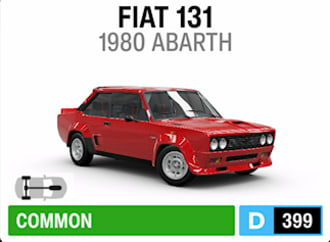
1980 Abarth Fiat 131
Abarth"Analyzing the raw telemetry, the 1980 Abarth Fiat 131 proves to be the more capable machine in all-around festival racing, outclassing the 1968 Abarth 595 esseesse."
| 1968 Abarth 595 esseesse | Metric | 1980 Abarth Fiat 131 |
|---|---|---|
| 100 | Performance Index | 399 |
| 2.6 | Speed | 4.3 |
| 3.8 | Handling | 4.1 |
| 1.7 | Acceleration | 4.1 |
| 2.6 | Launch | 3.9 |
| 2 | Braking | 3.2 |
| 5.2 | Offroad | 5.9 |
| 150 | Top Speed (MPH) | 150 |
| 1257 | Weight (lbs) | 2161 |
| RWD | Drivetrain | RWD |
| 25,000 | Price (CR) | 125,000 |
📈 Technical Data Analysis:
Speed & Acceleration Analysis
When it comes to straight-line performance, the 1968 Abarth 595 esseesse boasts a speed rating of 2.6, while the 1980 Abarth Fiat 131 hits 4.3.
The 1980 Abarth Fiat 131 pulls ahead in long stretches, making it a formidable opponent on the Tokyo highways.
Handling & Cornering Dynamics
In the tight technical sections of the Mount Fuji passes, handling is everything. The 1968 Abarth 595 esseesse features a handling score of 3.8, whereas the 1980 Abarth Fiat 131 manages 4.1.
The 1980 Abarth Fiat 131 maintains superior stability through high-speed sweepers, minimizing the risk of traction loss.
Launch & Braking Efficiency
Off the line, the 1968 Abarth 595 esseesse uses its 2.6 launch rating to grip and go, while the 1980 Abarth Fiat 131 relies on its 3.9 rating.
Braking from high speeds is equally critical; the 1968 Abarth 595 esseesse stops with a score of 2, while the 1980 Abarth Fiat 131 records 3.2.
🏁 Race Scenario Breakdown
Higher top speed rating allows for sustained high-velocity overtaking.
Superior braking and handling allow for more aggressive entry and exit speeds.
Suspension travel and tire compound optimization for loose surfaces.